- Blogs
December 23, 2025
NOCTA’s mature, battle-tested product line ensures peak performance and reliability across diverse terrains and platforms in the most demanding environments.
This jam-proof, visual-inertial positioning solution provides drift-free positioning in GNSS-denied environments, ensuring mission integrity when traditional systems are compromised.
Engineered for Group 1-2 UAS, NOCTA’s low SWaP design maximizes flight endurance and payload capacity without compromising overall platform performance.
A self-contained, easy-to-integrate secondary GPS module, NOCTA is operational on diverse platforms ranging from tactical UAS to complex manned aircraft.
NOCTA provides passive, drift-free positioning for UAVs operating without GNSS.
Field-proven and platform-agnostic, it integrates as a secondary navigation source without disrupting existing autonomy stacks.
Built for integration, NOCTA helps UAS OEMs move from development to deployment faster.
NOCTA is a vision-based positioning system for UAVs operating in GNSS-denied or spoofed environments. It fuses real-time optical imagery (day and/or thermal) with inertial data to compute accurate, drift-free position without relying on GPS.
Unlike GPS or tracking-only systems, NOCTA provides true navigation, not dead-reckoning or relative motion estimation. It operates passively, without external signals or communications, continuously resolving absolute position and preventing error accumulation to maintain mission integrity over time.
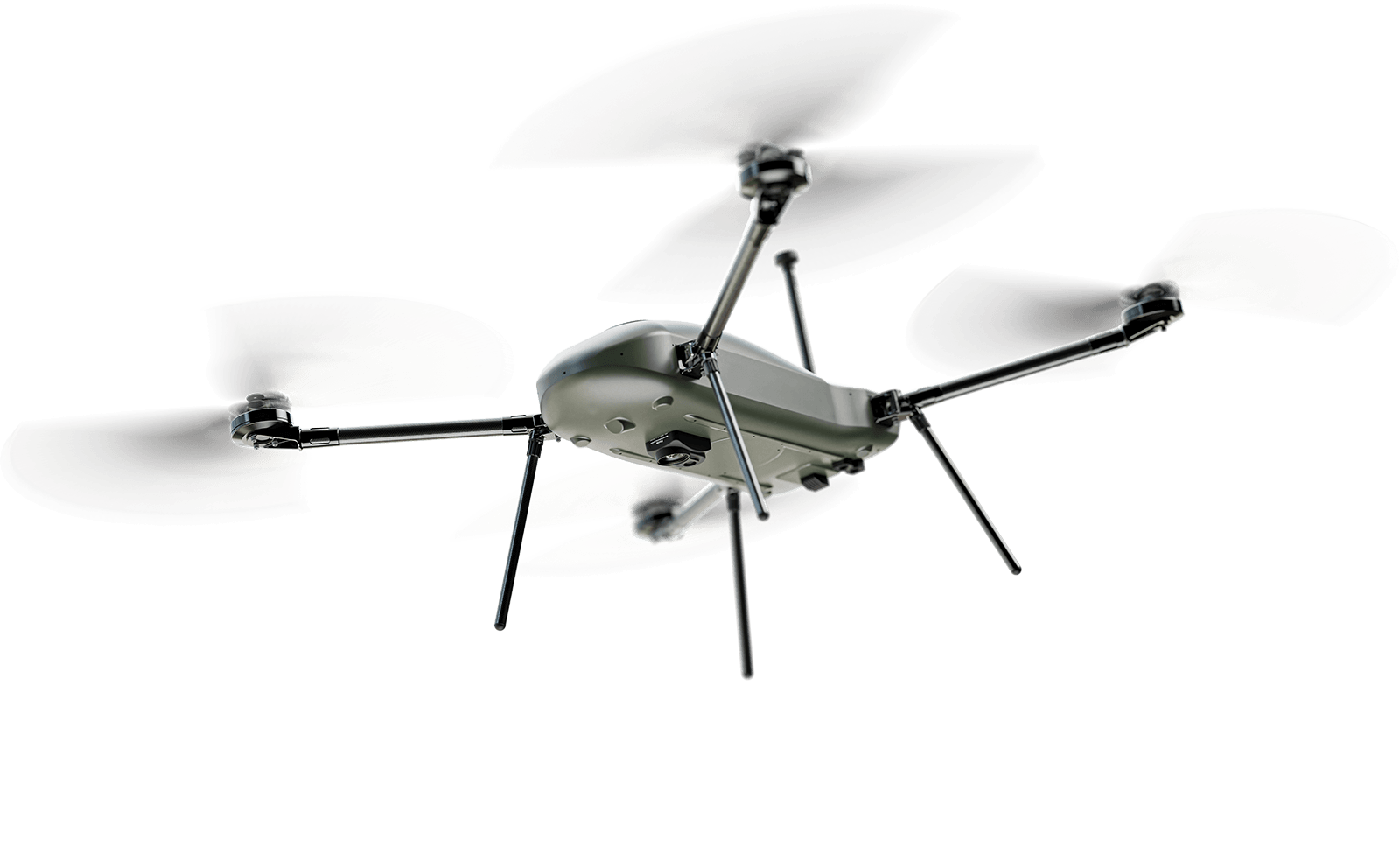
NOCTA is platform-agnostic and designed for Group 1–2 UAS, including multirotor, VTOL, fixed-wing, and logistics drones. It integrates as a fully self-contained secondary GPS module and is operational across diverse aerial platforms.
In addition to assured positioning, NOCTA enables autonomous flight continuity in GNSS-denied environments, including auto-landing and mission recovery.
Its GeoFusion™ engine also supports transformation between geospatial data and real-time imagery for operational alignment.
NOCTA is engineered for low-SWaP operations, weighing 150–250g with power consumption of approximately 5W.
This design preserves flight endurance and payload capacity without compromising performance.
December 23, 2025
December 23, 2025
December 23, 2025
October 28, 2025